Showing posts with label Hearing Things. Show all posts

Sunday, July 10, 2011

Analogized?

Any re-issue of an album from the 1960s or 70s will proclaim that it has been digitally re-mastered – the term (and indeed the prefix re- itself) implies both a return to and a revelation of something. There is an implication that through the process of digital re-mastering we might find again the elusive lost original. An original which existed at some point in the analogue past and in an analogue form. The digital promise is that through the act of transference from reel-to-reel tape to a string of bits we can travel back in time and our analogue original can be regained and preserved.

But did the analogue original ever truly exist or is it a mythical creation that haunts the re-mastering process always threatening to be revealed yet suitably unobtainable causing albums to be re-mastered not once but several times?

Let s don our white lab coats and take a look at the steps in digital re-mastering process. Firstly we must go to the vaults and take out the master tapes. The master tape would normally be large 10 inch ¼ inch reel to reel tapes recorded at 15 IPS (inches per second) and containing a two track recording. These recordings were usually mixed from (depending on the era) 4, 8, 16, 32, 64 and 128 multi-track tapes.

However there may well be more than one reel-to reel master. Until the late 1960s both a stereo and a mono master would be produced. The mono master would not simply be a mono mix-down of the stereo mix but a separate mix from the multi-track often with a quite different sound from its stereo counterpart. Whether stereo or mono a further reel-to-reel tape would be made from this ‘original’ master by the cutting room engineer as he adjusted EQ and levels in an effort to make the vinyl record sound as 'good' as possible. Cutting vinyl was (and is) something of an art and certain cutting engineers would be valued for their work in knowing just how much could be squeezed onto the disc. Porky’s Prime Cuts for example was the name given to work by the mastering engineer George "Porky" Peckham who was famed for cutting discs - for example Porky cut a number of the T.Rex hit singles of the 1970 such as Metal Guru (and indeed also the Table Matters EP by Storm Bugs).

So already the ‘original’ analogue master tape is becoming a shifting target. A digital transfer from the cutting engineer’s master might in theory sound more like the vinyl record but that then doesn’t take into account the degree to which a pressing can shape a sound. A cutting engineer may for example have boosted the treble in places (especially towards the middle of the record) which on the finished vinyl sounds fine but if transferred to digital would sound too bright and so on. Then there is the issue of hiss. Engineers in the pre-digital era spent considerable time trying to eliminate the background noise which any analogue system naturally produces. Digital technology has accustomed us to a hiss free soundscape and the advent of noise reduction hardware and plug-ins will tempt all but the most resolute to remove at least some of the hiss not to mention clicks, pops, crackle, hum and other analogue undesirables.

This all assumes that any version of the master tape is still in existence. Had the two track master been destroyed we could if we still had the multi-track tape mix the tracks once more. However a final mix down in the 1970s (before automated mixing desks began to appear) was often a very much an on the fly process with many hands on the mixing desk faders bringing different musical parts in and out as required throughout a song. Furthermore some effects such as echo and reverb might have been applied only at the mixing stage and so to recreate the sounds we would need to have the same effects units available and maybe in a similar way to the moving faders adjust them during the course of the mix. It soon becomes clear that replicating the original mix is going to be a far from easy task; we might approximate it but probably not reproduce it.

The re-mastering process then become not so much a one-off event as a series of séances in which the producer assisted by the latest algorithms and the finest new plug-ins attempts to make contact with the phantom original and call forth its presence - only for it to fleetingly appear before receding once more to the other side.

Friday, January 08, 2010

Lo Fi - Screwing a ribbon between two circles


What with Radio 4's PM programme having a feature on the return of the cassette as art object it seems Lo-Fi is to be one of the themes for 2010. In which vein I was contacted late last year by a South American (Colombian to be precise) music magazine called Shock and interviewed on my opinions about analogue and Lo-Fi, Here follows a few short extracts from a transcript translation by Google.

Low-fidelity sounds you return the heat and dirt on the music scene that recalls, among cassettes and vinyl, an earlier time still has stories to tell. The analogue resurrected and promiscuous flirts with the mainstream, the underground and the new generations.

Philip Sanderson, who produced the record label independent Snatch Tapes, a label in the UK has been willing to resurrect the old formats of music, told Shock version of his own nostalgia. "The object, be it vinyl or cassette, has been too important in the history of music. They provide, together with the cover and liner notes, a visual dimension. An aesthetic and noise condition is lost with the downloads.

Sanderson, who in addition to producing music with his band makes Storm Bugs, one of the most legendary of DIY (Do It Yourself) in London, remembers well the little asepsis and the warmth of the old formats. "With an Mp3 file and you have nothing to what you can have fun a good time. The digital can be so clean and yet so cold I think we need to bring back some dirt and heat with similar productions and objects.

The method of producing a tape is much more complex than screwing a ribbon between two circles and is even harder if you want to make one carried by the spirit, power and the rawness of a production lo-fi. "That's not as silly specks," said Philip Sanderson, who really knows what he means to give life to a low-fidelity production pressed on this analog format. "In Snatch Tapes use many things and nowhere at the same time. We break speakers to create interesting distortions they propose other sounds to the melodies, voices and instruments; overprint tapes, we use the cacophony and noise from the environment to strengthen sound sequences. All of these techniques for very lo-fi twist and transform the sounds that eventually will rotate tangled cassette loops, "he says.

While manufacturing of one of these rectangles sound is an arduous process, its sale is a hell of work and underpaid. If hardly a music lover spends an average $ 1.29 to buy the latest hit from the iTunes Store worldwide, imagine how much would pay for the same song "bad settings" in a cassette.

According to Nielsen SoundScan, a system that collects data on sales of albums and singles in the United States in the first five months of 2009 vinyl sales rose 50 percent from those that took place in the same period last year . While for the vinyl everything is 'in crescendo', from sell 700 thousand in 2008 to 1 million in 2009 for CDs and digital albums will ruin everything, reducing its sales between this year and last in 30 million and 6 million respectively.

Juan Pablo Gallon | Shock.com.co
.

Thursday, July 31, 2008

Voice Box


Tune in this coming Friday the first of August at 5.30 to Resonance FM and the Sound Projector radio show for 1 hour 30 minutes of Voice Box; a montage of spoken word ill matched and yet perfectly set to music and/or vice versa. All selections by Ed Pinsent and Philip Sanderson.

Update on August 6th: a full track listing is now up on the sound Projector site.

Thursday, July 27, 2006

domestique electrique


Before Claire Thomas & Susan Vezey were defrocked so to speak there were plans afoot for a follow up tape to Reprint. Unlike Reprint which was largely tape delay based the new work was to employ small fragments of sound from the domestic interior amplified and then looped and re looped, speed changed, treated, re looped and so on. The sound sources ranged from the electrical hum of the kitchen fluorescent to the static crackle made by a pair of denier nylons. A number of long almost drone like recordings were produced in 1981 in my flat in Deptford indeed the bedroom at the time was missing a mattress but had a number of nails banged in the wall on which hung all the loops (I used to sleep on the sofa in the living room) . The project even had a couple of provisional working titles including domestique electrique and deshabille electronique (that’s electronic undress en francais of course).

Given Cherry Red’s reluctance to pursue further releases with Claire & Susan once their identities were revealed the project was eventually abandoned and the tapes lost or destroyed. However in going through the archives for the various snatch re-issues some small fragments from the original sound sources were found along with a few notes for the project and so it was possible to reconstruct many of the tracks.

Two of these reproductions were included on a bonus CDR released with the 25 copy limited edition Box set (as in a box) of the Seal pool Sounds CD last year. 

Friday, November 04, 2005

Earwitness


Quotes from acosutic eveidence in the Kennedy affair

On the day of the assassination the Dallas Police Department (DPD) operated two radio channels. Channel I was for normal police radio traffic and channel II was assigned for the use of the presidential motorcade. Each channel was recorded by a different device. Channel I was recorded on a Dictabelt and channel II on a Gray Audograph. Both machines worked by engraving a track into a plastic medium. The Dictabelt used a rotating cylinder and the Audograph used a flat disk, similar to a phonograph record. Both machines were transmission actuated.

An unknown motorcycle tuned to channel I had a defective microphone button that caused it to continuously transmit over a five minute period during which the assassination took place.. If this motorcycle had been part of the motorcade it might have picked up sounds of the gunshots. If true, those sounds could be used to determine how many shots were fired, their timing, and using echo location methods, where the shots came from.

The original recordings were made on machines which utilized a stylus which etched an acoustic groove into a soft polyvinyl surface. The recording instruments were useworn and had developed idiosynchracies. Jim Bowles, head of police communications unit at the time, writes that the needles would sometimes not "groove" properly, that parts of messages would not be recorded, or a "ghost" signal would be recorded. He also states that it was a common experience to observe noticable changes in speeds between units [Bowles 1979].

Secondly, the original recordings had become scratched and worn from multiple playbacks during the transcription process that was applied during the Warren Commission's investigation. As a result, the tendency for the stylus head to skip was exacerbated.

Thirdly, both recorders had a sound-actuation feature which was designed to save space on the recordings by pausing whenever there were periods of dead-air. To the extent that this happened during the critical sequence of events there would be disagreement between tape time and actual time.

Fourthly, the electronic recordings which have entered into evidence involved the use of separate playback and/or recording instruments, sometimes both, which inevitably results in a time warp because playback speed and original recording speed are unlikely to match precisely.

On playback the needle would sometimes get stuck in a groove and repeat that groove, sometimes twice. Table C-1 of the NRC report subtracted the time that these repeats took from the elapsed time. This seems to make sense, but due to the mechanical construction of the Audograph machine it was the wrong thing to do.

The needle assembly on the Audograph doesn't move at all. The disc is mounted on a spindle and moves horizontally under the needle as recording progresses. The horizontal motion of the spindle is a result of being mechanically geared to a worm gear, such that, as the spindle rotates, the center of the disc moves away from the needle assembly. There is no freedom of motion in this mechanical system, except for the tip of the needle. The repeats happen because the needle tip has some flexibility and may get stuck for an additional rotation or two, but the horizontal movement of the disc never stops and the needle must eventually catch up to where it should be. When the needle does catch up it will skip over sections of the recording. In the long run any repeats will be roughly matched by forward skips where the needle jumps over grooves.

Another copy of channel II was made by the FBI on a high-quality phonograph, instead of using the Audograph machine. The tape of channel II made by the FBI for the NRC panel appears to be a complete recording without skips or repeats in the period in question. The NRC report states, "[the original Gray Audograph was] transcribed, as described in Appendix C, onto tape, with care taken to minimize the 60 Hz hum that was added to the signal and to ensure that no skips or repeats were introduced in the tape recording of either channel. No break interrupted the Channel II recordings as was the case for the Bowles tapes."

Careful examination of the recording during the six minutes after the shooting confirms that there are no obvious repeats in it. A side by side comparison revealed the forward skips in the Bowles version that the NRC didn't account for, and also would have revealed skips in the FBI version had they been there, and had such skips not been precisely mirrored on the Bowles tape.

The FBI tape is a perfect candidate for performing timing studies, except for one problem. As the NRC report says, "The Gray Audograph disk (Channel II) could not be played on an original Gray playback unit without introducing skips and repeats. It was possible to play it successfully without either of these artifacts being introduced by using a phonograph turntable and phonograph arm, cartridge, and stylus. However, phonograph turntables operate at a constant rpm, whereas the Gray equipment's rpm reduced as recording progressed. Moreover, the Gray Audograph records from the inside out, whereas normal records begin at the outside. Thus, when the tapes are played back, there is a speed distortion that causes material at the beginning of the tape (the inside of the record) to be slowed down (time intervals between events are longer and the frequencies are lower than those originally recorded) and material at the end of the tape (end of the record) to be speeded up relative to true speed."


Read more at
http://mcadams.posc.mu.edu/odell/

Thursday, October 06, 2005

Unbalanced

Contemporary sound making is obsessed with manipulation. Sounds are variously: distorted, fuzzed, flanged, phased, pitch shifted, EQ’d, echoed, reverbed, ring modulated, filtered, panned split into grains and reassembled, glitched, stretched, morphed, and so on. One wonders what sound did to deserve such treatment(s). All of this has an the air of alchemy about it; as if put through enough processes the base metal of everyday noise will give up its acoustic secrets and be transformed into something new and unexpected.

Wednesday, September 28, 2005

Record Test


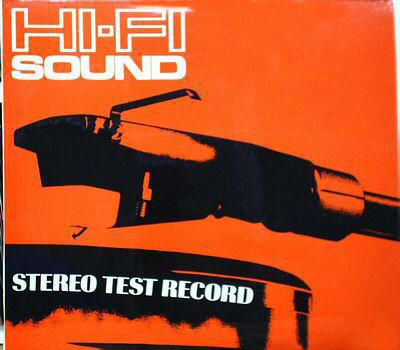
Stereo test records appeared regularly in the 1960’s and 1970’s. One side of the LP usually showed off examples of the wonders of stereo recording, often classical music or sound effects that passed magically from one speaker to another, whilst on the other side of the album were detailed instructions on how best to set up your stereo for full enjoyment of those micro groove frequencies. These instructions were often combined with a series of electronic bleeps and bloops that that supposedly allowed for proper adjustment of tracking and frequency response of your Hi-FI.

What is appealing about stereo test records is that the discs break the usual continuity of the recorded medium. As was suggested in turning the Picture Down a couple of weeks back contemporary music recordings are highly artificial. Stripped of the natural visual counterpart the music attempts to fill the space with a continuity of sound. This can literally mean a filling of the sound space using compression to create an impression of absolute volume or it can mean a more subtle continuity that of an uninterrupted signal. This can apply from everything from easy listening music to the most leftfield noise work.

With their direct instructions to the listener to get up and start moving speakers about and even reconnect wires and adjust the height of the needle Stereo test records break this continuity. The apparatus of reproduction is foregrounded and the listener becomes an active performer. Playback becomes not just a seamless process but open to change, variation and even chaos.

Instructional LP’s on everything from dance to cookery shared many of the same characteristics of the Stereo test record. Diagrams and fold out sheets would often accompany the records thereby restoring a visual element to the audio, as intrepid couples would try to master the intricacies of the Latin Hustle, or the soufflĂ©.

Test records were either budget releases or given away free with audiophile publications. With a little rummaging examples can be readily found in flea markets or in the exotic sections of second hand record shops.

Thursday, September 01, 2005

Instructions are contained on the tape, which you will find in the blue rucksack.

Deciding that it was time to see more of Romney Marshes we set off clutching a batch of the recent (and free) walk walk walk leaflets jointly published by East Sussex Council and Paths to Prosperity (ah yes regeneration through outdoor exercise). The leaflets include a map and copious instructions. These are of the " instead of continuing along the footpath, turn right at the junction, continue for 300 metres (330yds) and then follow the footpath uphill to reach a sign, ignore the left hand turn (the surfaced track) cross over and follow the edge of the field before bearing right before..." variety. It soon became apparent though that in order to follow the prescribed (doctors orders) route one had to be reading the guide almost continuously and that the landscape was something glimpsed (rarely) in between sentences. A textual experience then.

Seeing by wireless...
I am writing this in a house which is opposite (give or take a patch of green) where John Logie Baird made some of his first televisual experiments. Apparently Logie was ordered to Hastings for his health and combined bracing walks to Fairlight with knocking up dodgy apparatus in his rooms (his landlady eventually threw him out after one incident too many). The house now has a blue plaque on it and sometimes at night one can see the ghostly blue light of an unseen screen illuminating the sitting room walls. If only all site specific installations were like that.

Which all ties in rather nicely with last night's Science and Seance programme on BBC2 in which various eminent inventors (Baird, Marconi, Edison etc) were shown to have a belief in the spirit world and a desire to make contact with the other side. I will admit to an interest in such things, though as the programme went on one did wonder why the voices of the dead are always deemed so much more interesting than the patter of the living.

Wednesday, August 24, 2005

Queen Bitch to Egg Head


Pre Youtube live footage of early Roxy Music was hard to come by. Early of course means the 72-73 heyday when ENO was still with Roxy. This is Roxy at their peak with a taught balance between Ferry's crooning and the bursts of free form sax by Andy Mackay, fluid guitar by Phil Manzaneara and of course electronics (VSC3) by ENO. Ferry is resplendent in white suit whilst the other members (with the exception of the drummer of course) have a range of Glam outfits. ENO's attire is by far the most outrageous and this is matched by a camp tranny demeanour, all pouting lipstick, raised eyebrows and suggestive wiggles. Within two years though ENO would have left Roxy and the feathers and make up would be gone.

ENO's visual and sartorial transition from queen bitch to egg head is one of the more interesting career changes as it was matched by a musical and aesthetic switch from the excessive to the minimal. ENO's contributions to Roxy echoed his appearance, with a barrage of electronic bleeps and filter swoops. His use of treatments to change and alter what the other band members were playing were like some gender bending surgery performed on the otherwise masculine solos. When ENO left or was forced out of the band his first LP Here Come the Warm Jets extended his Roxy repertoire but now the lyrics and vocals were by ENO rather than Ferry. Songs like Baby's on Fire, and the Paw Paw Negro BlowTorch were sung in a suitably mannered fashion and the lyrical content was full of camp observations. The Warm Jets cover shows ENO's overstuffed Victorian bedsit with the fireplace overflowing with bric a brac and general frippery.

Here Come the Warm Jets was followed by Taking Tiger Mountain by Strategy which whist not quite as camp as the first LP was still a jagged unkempt beauty. In the lithographs on the sleeve ENO is shown still with eyeliner and long blond hair but with his hand placed strategically over his forehead

By the next LP - Another Green World the flowing locks and make up have gone and ENO is shown reading studiously against a neutral backdrop. The music on the LP has also changed; no longer jagged and unkempt, half the tracks are now sweet instrumentals and on the numbers on which there are vocals the voice is far less inflected


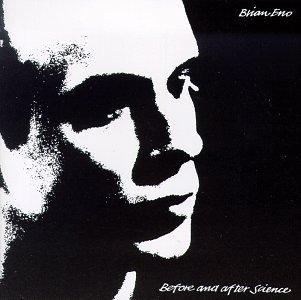
The transition started on Another Green World was to be completed on the follow up Before and After Science. Oo the cover is a cropped black and white image of ENO looking for all the world like the Russian constructivist El Lissitzky. The transition to intellectual Egg Head was complete. In place of the brash and excessive we now have the paired down and minimal, or at least pop minimal. From now on tracks would have quasi-poetic titles and gradually the vocals would all but disappear to be replaced by ambient tones.


Unlike Bowie who moved from the gay flirtations of Ziggy to a number of other guises ENO¹s transition was single and final. The shame is that in throwing out the eye liner something was musically lost as well and for all the commercial and financial successes of the production work with Bowie, Talking Heads and U2, ENO¹s most challenging and original work remains those first two LP¹s.

Sunday, July 24, 2005

The Death of the Long Player

But surely I hear you say vinyl died as a mass format years ago, only kept on in some sort of half life by indie rockers and dance floor 12-inch aficionados. Well yes, the CD did replace the record but it is really just a holding station, a transitory format on the way to the download. The CD with all its initial claims for digital clarity and resistance to scratches was in effect never anything more than a miniaturised LP, a compact disc. The first CD’s even had diidy versions of full sized 12-inch artwork. True the CD could hold another 25 minutes of music and rehashes of the LP sleeve soon gave way to the intricate booklets, but the paradigm of the LP lived on. Only avant garde and classical musicians ever made any real us of those extra minutes and CD booklets are always somehow less than overwhelming, good for information but not for artwork. The CD saved space on the racks and cost record companies less to produce but in the end the CD is just another round disk that spins faster and is read by a laser rather than a stylus.

But the compact disc did give us CD quality sound which whist no better and some would say worse than analogue did have one advantage, it was digital and as such was format blind. At first the only other formats one could transfer digital music to were hideously expensive and often intentionally so. The failure of DAT as a consumer medium can be partly blamed on the fact that Sony was very wary about letting the general public near something, which could accurately clone music without any loss of quality and so aimed and priced the format at so called audio professionals. Well before p2p was even a gleam in Napster’s eye many knew the threat that digitisation posed to revenue streams.

It took the combination of affordable PC’s, the internet, the iPod and some fancy codecs to finally liberate the digital genie from the CD bottle, indeed to liberate music from the record. The full ramifications of this liberation have still to be felt; consumers have for the time being switched the fetishisation from format (the disk) to the means of playback (the iPod). But what of the music, there is an argument that the hoi polloi took to downloads as they only ever really wanted the one or two “hits” from LP’s/CD’s anyway not all the “filler” and everyone can recall their parent buying a whole LP simply for that track they heard on telly or in a film.

So will the download kill off the whole idea of LP once and for all ? Certainly the CD can only have a few more years to live. Now is the time to rip your collections to the computer and get down to Record and Tape Exchange before they become worthless. But what then? Will artists continue to release groups of tracks together or simply put them out one at a time? Might we see a return to the concept album in music, whereby longer self contained tracks are produced which defy easy separation into three-minute chunks? Freed from the format, music is now curiously liberated to become…